Evaluating serverless Container-as-a-Service platforms: Knative, Cloud Run and AWS Fargate
20/01/2022 · 9 min
Serverless became popular through Function-as-a-Service, but the function programming model constrains running general-purpose applications. Platforms implementing Container-as-a-Service (CaaS) deliver software as container images: they ease migration of traditional applications, give control over the runtime, remove hard execution-time limits and reduce lock-in. The dissertation evaluates these platforms on two fronts — qualitative and quantitative.
Source code and reproduction scripts on GitHubnewtonisaac/master-lab ↗Qualitative evaluation
Seven platforms were characterised against execution criteria (memory, CPU, storage, GPU, execution time limit, concurrent executions), scalability (autoscaling, autoscaling metric, scale to zero, warming), triggers, security and integration: Knative, OpenWhisk, OpenFaaS, Azure Container Instances, Google Cloud Run, AWS Lambda and AWS Fargate.
- Open source frameworks (Knative, OpenWhisk, OpenFaaS) run on top of orchestrators and give full control, but require management — and several rely on custom image templates, which pushes them away from pure CaaS.
- Public cloud services (Cloud Run, ACI, Fargate, Lambda) shift management to the provider in exchange for restrictions.
- Azure Container Instances and AWS Fargate keep containers continuously active: no scale to zero, but no cold starts either.
- Knative, OpenFaaS and Cloud Run allow a minimum container count — a hybrid model that mitigates cold starts.
- Selection criterion for the quantitative phase: only Knative, Cloud Run and AWS Fargate. OpenWhisk, OpenFaaS and Lambda require custom image templates; ACI has no autoscaling.
Experiment architecture
All infrastructure, benchmark images and load scripts are in the master-lab repository. Locally, the project spins up a Kubernetes cluster via Terraform for Knative; for Cloud Run and AWS Fargate, the same container set and scripts can be reused on each platform.
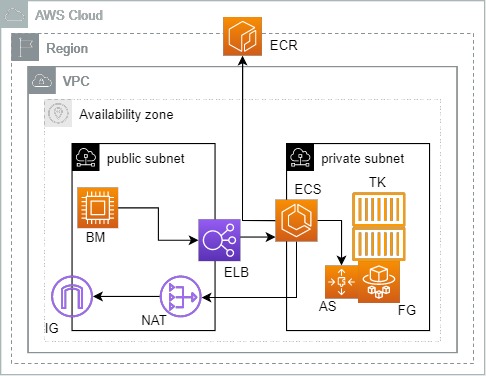
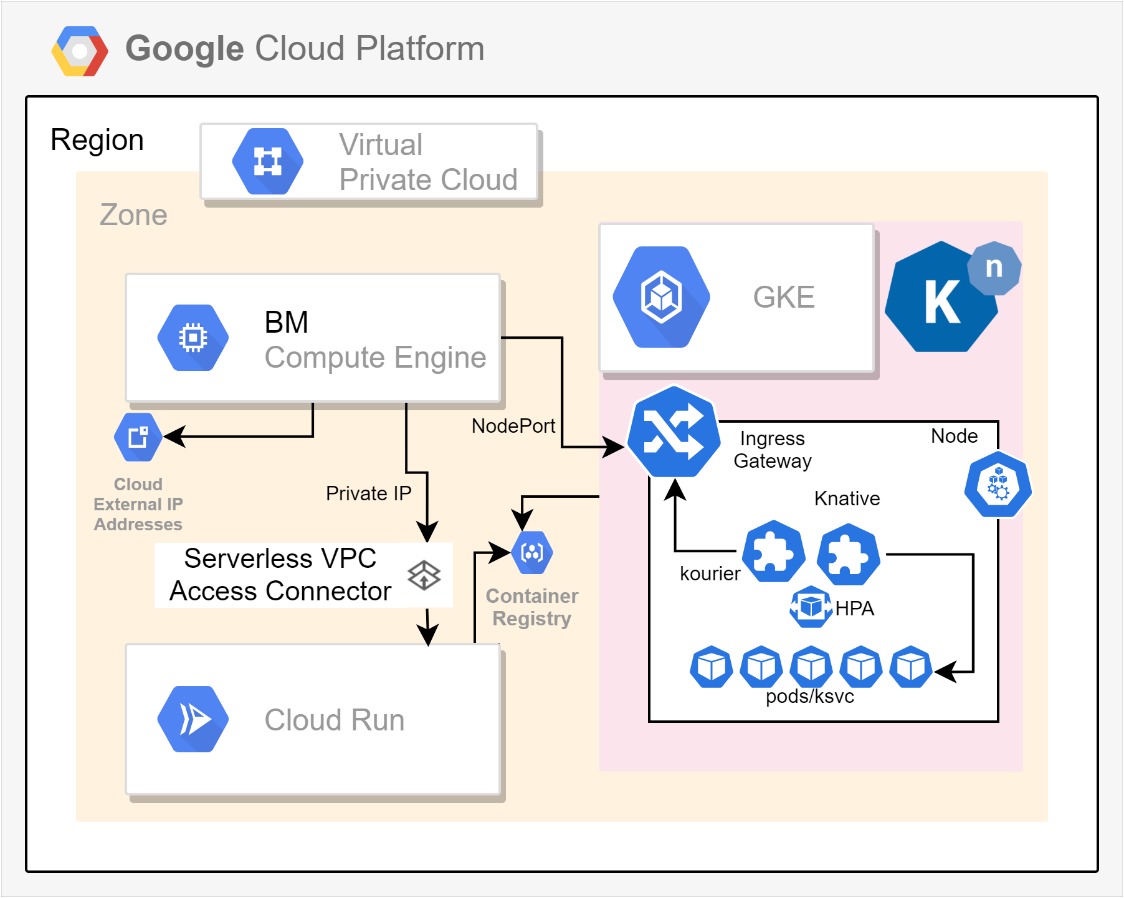
master-lab repository on GitHubTerraform · Docker · k6 ↗- Benchmark machines (BM) in two geographically close European regions: AWS Stockholm (eu-north-1) and GCP Hamina (europe-north1).
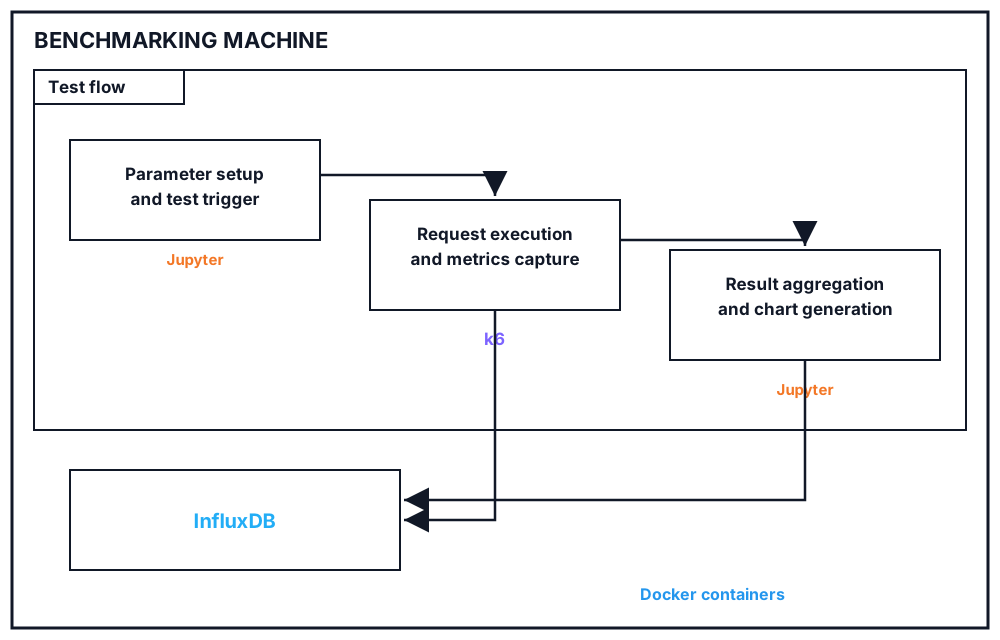
- Each BM boots via docker-compose with two containers: InfluxDB (time-series store for metrics, centralised on GCP) and a custom Jupyter Notebook image holding the automation scripts.
- The load agent is k6.io, launched by a bash script parameterised with URL, platform, test id, run id and the third independent variable.
- k6 streams per-request metrics into InfluxDB; Python scripts in Jupyter query, aggregate and plot them.
- Knative ran on a 3-node GKE cluster of e2-standard-4 VMs (16 GiB, 4 vCPUs), exposed through an Ingress. Platforms were configured without scale to zero, to avoid cold starts, and with a single container per instance.
- Benchmark images for C#, Go, Java, Node.js, PHP and Python, with yarn commands to build, run locally and push to GCP/AWS.
- Terraform and Docker Compose in the repository allow the test environment to be reproduced: local cluster, metrics collector and Grafana dashboard.
The seven tests
- T1 — Load: a sequence of low-cost GET requests (a Node.js “Hello World” endpoint) over 60 s with a single virtual user, measuring end-to-end latency.
- T2 — Concurrent load: latency, request count and success rate with virtual users (vus) ramping in parallel. It is the base for T4 to T7.
- T3 — Spike: elasticity, with a ramp-up and ramp-down phase to force scale-out and scale-in.
- T4 — Payload size: T2 with payload size as the third variable (I/O impact).
- T5 — Programming language: T2 varying the container language/image.
- T6 — Memory and CPU: T2 across proportional memory and CPU settings.
- T7 — Compute intensive: recursive Fibonacci, correlating the Fibonacci number with increasing vus.
Results
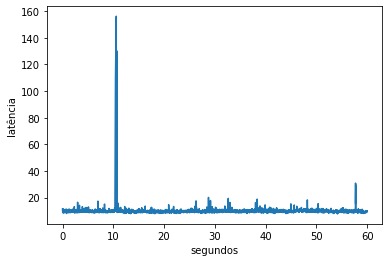
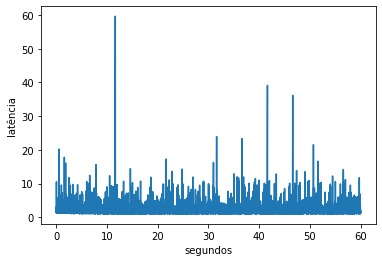
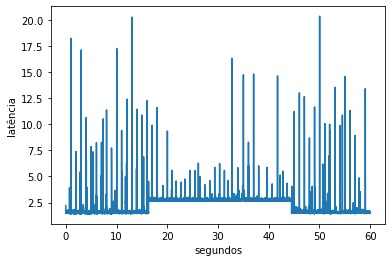
- Low-load latency (T1): Knative and AWS Fargate are practically tied; Cloud Run shows latencies around five times higher.
- Scalability (T2/T3): the order flips under stress — Cloud Run improves as vus grow, followed by Knative and last AWS Fargate. Success rates stayed at 100% (99.99% in the spike test).
- Stability: despite the best behaviour at scale, Cloud Run was unstable across every experiment, with high latency spikes — an argument against it for critical systems that need predictable latency.
- Payload (T4): AWS Fargate is indifferent to payload size; Knative and Cloud Run improve response times, likely because heavier I/O resource usage triggers scale-out earlier.
- Language (T5): Go and JavaScript perform best under parallel load; Java and especially Python degrade response times sharply.
- Memory and CPU (T6): more resources improve performance, but the gain is limited and depends on application efficiency and the configured scaling rules.
- Compute intensive (T7): Knative is the most efficient, with more computations and lower average latency; AWS Fargate failed to compute large Fibonacci numbers and showed high latency.
Cost and implementation effort
- Cloud Run and AWS Fargate show similar estimated and actual costs, but Cloud Run allocates more CPU time, supports scale to zero and bills only for request execution time — making it cheaper.
- Knative is the most expensive option, since it depends on a VM pool for the Kubernetes cluster. It is justified when private cloud or avoiding vendor lock-in matters.
- Learning curve: Cloud Run is the simplest (one CLI command creates a scalable service); Knative comes second if cluster setup is excluded; AWS Fargate demands more components and specific AWS networking knowledge.
Conclusion: CaaS platforms respond well to increasing traffic and offer concrete mechanisms for serverless's classic problems — cold starts and execution limits. The choice comes down to the trade-off between scalability (Cloud Run), predictability and portability (Knative), and integration with existing infrastructure (AWS Fargate).